Comprehensive Trek Guide for Everest Base Camp Trek
The adventure journey to Everest Base Camp Trek begins with an inspiring 25-minute flight from Kathmandu to Tenzing Hillary Airport at Lukla. Lukla (2,840m/9,317ft) is the beginning point and ending spot of the trek.
It lies in the eastern part of Nepal; you are here to get ready for the Everest Base Camp Trek adventure in the Khumbu region. Hence, after getting off the flight at the Lukla airport, the long walking trip resumed, and our targeted point is Phakding on the first day.
The journey passes through the alluring nature of Chaurikharka, savoring the fabulous scenery on our way, then descends along the bank of the Dudh Koshi River.
The hiking exploration will be filled with the Sherpa traditional villages, excellent landscapes, lush green forests, and crossing several suspension bridges over Dudh Koshi and other Himalayan Rivers of the Everest region.
Chaurikhraka, Chheplung, Nachipang, and Koshigaun are some notable mountain settlements lying between Lukla and Phakding, which are settled at an altitude of 2,500m/8202ft on the bank of Dudh Koshi River.
During the spring season (March to May), the journey will be filled with colorful rhododendron forests and blue pines growing on the side of the river valleys that make your journey more enchanted.
The trek leads you to more exciting places after a delicious breakfast. The journey will resume to Namche Bazaar as the trails are quite strenuous, but the Himalayan vistas are quite attractive, with lush green plowed fields and green alpine woods, including rolling slopes, which definitely stimulate you to move forward to your further destinations.
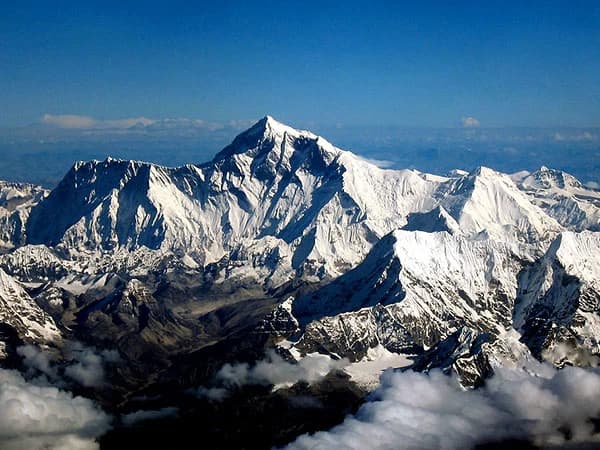
The glorious Mount Everest stands towards the sky, catching your eye from the top of the hill. On the way, we will obtain permits to enter the national park from Sagarmatha National Park and move further, continuing walking activities to the Everest Base Camp odyssey to reach Namche Bazaar, which is the well-known gateway to Mt. Everest.
Namche Bazaar is the traditional trading center to exchange goods with the locals and Tibetan people in the ancient period, where 98% of the houses in this area owned hotels and restaurants that let you get the chance to mingle with the locals of Namche Bazaar.
Similarly, Tok Tok, Benkar, Jorsalle, and Monjo are the main rest point that lies between Phakding and Namche Bazaar, as all these villages are ornamented with huge stones carved by Buddhist Mantra “OM MANI PADMI HUM”.
These Mani stones and Chortens are the sacred property of Tibetan Buddhist’s property, as people believe that these things bring good luck and well wishes for all the trekkers and for the locals rounding these in a clockwise circle for positive vibes in your mind.
The exploration trip lets you savor the sights of several prayer flags and large prayer wheels as the chilly breeze from the pristine river reminds you of a higher altitude.
The trails lead through several unique suspension bridges hanging between cliffs closest to each other, and your ears get sounded by the currents of the river gushing just below. It will be an awesome moment to cross the incredible Tenzing Hillary suspension bridge on the way to Namche Bazaar.
The suspension bridge is beautifully tied up by the prayer flags and colorful scarfs called Khada, which are put up by the Sherpa community. Hence, after the steep uphill trek, you will reach typical Namche Bazaar (3440m), where you will get substantial elevations and need time for acclimatization.
For the utilization of this resting period, we set the hike to the Everest View Hotel or the beautiful Khumjung Sherpa settlement and go to observe the local Sherpa mountain museum.
This museum is run by Sonam, a famous mountain photographer, where you can have the opportunity to see traditional Sherpa household equipment, an art gallery, pictures of Everest mountaineers, and a glimpse of Sherpa history.
The interesting point of hiking over Khumjung and Everest View Hotel (highest–placed hotel in the world) is to broaden the knowledge and lively study of the Yak farm, Khumjung Buddhist monastery, Hillary School, and Syangboche Airstrip; although the airport has been closed for almost a decade, the views from here are outstanding.
The other day journey after acclimatization, we head towards Tengboche, another gem of the province of Everest.
The well–known Tengboche Monastery, the largest monastery in the region, is located at an altitude of 3,867 m/12687ft, in a pleasant mountainous environment perfectly suited for yoga and meditation, with just the sounds of air struck into the thin air produced by Himalayan flora and fauna, especially musk deer and Lophophorus.
The scenery of Mt. Ama Dablam greatly presents the most entertaining matter in the background, which makes you more delighted.
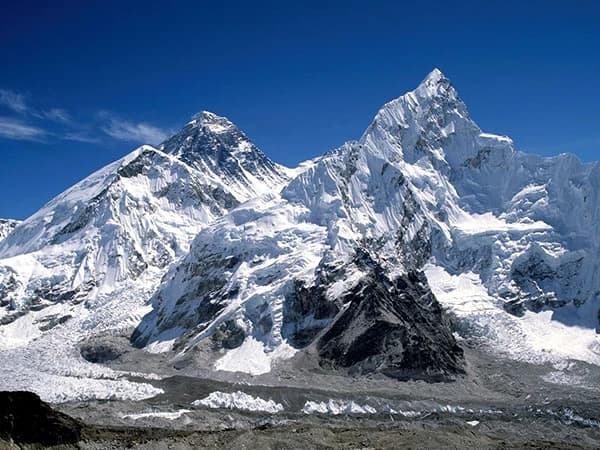
The route from Namche Bazaar to Tengboche passes through rocky trails up and down, and your eyes encounter the astounding views of Mt. Nuptse, Lhotse, and other numerous towering peaks as it is a walking tour of about 9 kilometers.
In addition, the next day trip will be set to the picturesque mountainous village of Dingboche; the place is largely occupied by the Sherpa ethnic group and set in the backdrop of Mt Ama Dablam and other neighboring peaks, where you can feel that you are in the lap of paradise.
Dingboche (4,410m/14,470ft), is the best vantage point to behold the Himalayan series of the Khumbu Valley such as Lhotse (8,516m/27,940ft), Nuptse (7,861m/25,791ft), Makalu (8,485m/27,838ft), Cho Oyu (8,189m/26,867ft), Ama Dablam (6,812m/22349ft), Thamserku (6,608m/21680ft), Island Peak (6189m/20305ft), Lobuche Peak (4,940m/16,210ft) and many more mountain series.
The trekking distance is almost about 11 km, may complete around 6 to 7 hours as the way first descend into the forest and pass through the small Sherpa settlement of Dibuche and followed by the rhododendron forests we cross the suspension bridge over Imja Khola reach Pangboche village after walking steep in the trekking trail where famous Pangboche Monasteries located which was built in 16th-century recording one of the oldest monasteries in the modern history.
Normally, people stop here for lunch, and they have a chance to soak in the natural beauty of various landscapes of hills and mountains on the horizon, then the journey goes through the Somari village and crosses another stream to get to Dingboche.
Dingboche village is beautifully settled in the mountain valley of the Khumbu region that you will gain a higher elevation and get ready for another acclimatization day for your Everest Base Camp Trek.
On this rest day, we set out on our journey to Nagarjun Hill to opt for the mirror views of Mt. Ama Dablam, Lhotse, Island Peak, Cho Oyu, and Makalu. Furthermore, after spending a day at Dingboche, we get ready for our next destination, Lobuche (4,940m/16,210ft), walking through the Yak grazing meadow towards Thukla.
From Thukla, it steeply ascends to Thukla Pass and rests for a while, then follows the rocky trail alongside the Khumbu Glacier. Along the way, you will be awarded by the excellent views of Mt. Pumori, Lingtren, and Khumbutse, and then arrive at Lobuche, walking approximately 8.5 km southwest of the base camp, let you an opportunity of rare view of the mountains.
After your stay in Lobuche, you are about to be ready to overcome the main goal of this trip to Everest Base Camp. However, the way before reaching to base camp all need to hike a rocky looser trail to Gorakshep (5,164m/16,942ft) and do check in at the tea house then eat your lunch, and be prepared for EBC leave your belongings at the tea house and go through the alongside the Khumbu Glacier until you step in the base camp as the path is full steeps climb in the losing rocks but the panorama is mind-blowing which you had never thought in your mind, lakes are gorgeous, glistering Khumbu Glaciers and awesome Khumbu Ice Falls that is soul gratifying.
Likewise, we will spend some time and take a life-memory photograph for your life experience, and it will be the most adventurous passion in your life at the base of the world’s highest peak. Everest Base Camp is not easy, as it is one of the most challenging journeys that you will have to prevail against altitude, nasty colder with frigid weather in harsh terrain.
The journey is tough, but it is a remarkable achievement in your life that your offspring will always feel proud of as a milestone in your lifetime experience.
Same as, while you step into the base camp, Khumbu Icefall is standing in front of you to welcome your great achievement, which is the world’s deepest Icefall. After spending our time with adventure breath, we will go back to Gorakshep and spend the night there waiting for our next day’s ascent to Kala Patthar.
The journey will be more adventurous; we will draw our courage from our heart and get ready and proceed steeply up to the Kala Patthar at dawn, then catch the extraordinary views of sunrise from the opposite side of Everest and surrounding peaks.
Similarly, we will be delighted by the magnificent sunrise view in the nasty cold and we will descend to Gorakshep and rest for a while then eat breakfast. After eating a delicious breakfast you need to pack your bag and hike down to Pheriche village for our next stop to spend our adventure night.
Subsequently, our next day is filled with joy that we have already overcome the great Everest Base Camp, and taking the unforgettable moment in our mind we proceed to Namche Bazaar after our delicious breakfast and head towards Tengboche.
The route is filled with beautiful rhododendron forests and juniper woods crossing a bridge over Imja Khola then taken by the final steep descent will reach Tengboche, a peaceful healing center by natural vibrations, and after some rest walk again descent to Phungi Tenga then cross the suspension bridge and ascend in the rocky trails inside the alpine trees.
Afterward, walking over the rocky path you will get in Sanasa and Kyanjuma, if we are lucky we may see wildlife like Himalayan goats, Himalayan monal, musk deer, and snow leopards. After, walking on the plain track we will reach Namche Bazaar where we spend our night in the chill and relaxed day after our long mountain journey to Everest.
In the same way, after our breakfast the journey again descent to Phakding downhill which is not that much difficult as ascending. We will pass through several suspension bridges and then reach Phakding and we may take our lunch there.
Finally, we set our destination to Lukla after our lunch completing our motto to Everest Base Camp. The way continues to move along the bank of the Dudh Koshi River on the rocky trail where we will encounter many trekkers, mules, and Jopke, it will be a huge amusement that you will experience in your life, and reach to Lukla is our final stop for the Everest Base Camp Trekking Trip.
So, you will have an awesome stay in Lukla as you can go sightseeing around the beautiful typical Sherpa local touristic market and can taste the local foods. Finally, in the morning after a delicious breakfast in Lukla, you will proceed to Tenzing Hillary airstrip at Lukla and take the 25 minutes flight to Kathmandu which is the ending point of your Everest Base Camp Trekking Trip.
Preparation for Everest Base Camp Trek
The journey to Everest is not a joke a higher spot, you need to ascend and descend in your walking journey on an uneven trekking route of around 13 days carrying your small backpack hiking for at least 4 – 6 hours needs more stamina and endurance.
So, it is better to do cardio exercises and physical activities like running and hiking a few months earlier. First, make a plan for Everest Camp Trek and do some study about the trail and keep your higher psychological phenomena and keep the regular physical training.
Furthermore, you have to understand that, there is less oxygen in the higher elevation as your lungs are unable to supply enough oxygen to your muscles so if you want to make it successful keep continuing the physical exercise.
Although it is not climbing Mount Everest still you need to prepare mentally and physically, both sections of your confidence level need the obtained your target to summit Everest Base Camp as the adventure exploration demands a high degree of difficulty.
You have to be aware and prepare for the rapidly changing weather and higher probability of acute mountain sickness.
Lifetime Adventure Experience in the Precious Base of the World’s Highest Mountain Mt. Everest.
The Mountains are the best choice for everyone for the adventure journey to experience peace, spirituality, and soulful nature. The Everest Base Camp Trek is allowing the blends of culture, nature, varieties of Himalayan landscapes, and numerous mountain vistas on the horizon. The journey is quite tough but it will test your endurance and stamina even in the difficult conditions that help you to struggle in the hardest times in your life.
Likewise, trekking must be required for safety, so it is essential to cooperate with the professional organizer of such fantastic expeditions. Finally, It is really the perfect memorable journey that you have ever done in your life.
The Length and Terrain of Everest Base Camp Trek
It is almost 92 kilometers that the total distance covered throughout the Everest Base Camp. Normally, the trek begins after a tasty breakfast around 7 am – 8 am as per your planning provided by the guide, and will get the chance to take many photographs of different landscapes and have a rest point for taking tea or coffee on the way to EBC.
The altitude is gradually getting higher and the trekking itinerary includes the perfect acclimatization for two days on your ascent. While climbing the mountains there should not be a rush as it might be risky for your health and chances to get easy altitude sickness, so, the walking should be smooth and slow as most hiking days are completed around the afternoon.
In the fact, people are thinking that they have to climb Mount Everest Base Camp but it is truly a trekking trip rather than climbing. The walking terrain is the well-trodden and defined hiking trail which is last in the glacial moraine of Khumbu glacier with the Khumbu Icefall. The path is covered by crushed rocks which do not offer the technical equipment and crampon.
In the past, those were rickety wooden affairs but nowadays it is facilitated by constructed higher metal suspension bridges over Dudh Koshi River several times down Namche Bazaar.
Best Time for Everest Base Camp Trek
The best time for Everest Base Camp Trek is spring (March, April, and May), and autumn (September, October, and November), during this time the weather remains pleasant means neither hot nor too cold.
If you want to observe the combination of greenery and clear blue sky with the glistering white silver snowcapped mountains then autumn is the perfect season but if you want to see the colorful vistas of rhododendron flowers with snowcapped shining mountains in the zenith then spring is the most recommended time for your awesome adventure.
There is not any risk of unknown weather and climate change as the atmosphere is quite translucent in the surroundings. In addition, the EBC trek is obtainable all months in a year but in the winter season it may be heavy snowfall, the Summer Mountains will be covered by clouds as well as the trail will be slippery because of continuous rainfall as flight might be affected by the bad weather in Tenzing Hillary airport at Lukla.
Everest Base Camp Trek difficulty
The Everest Base Camp Trek is an adventure trekking trip with higher elevation but the trail is not that much strain. Most trekkers suffer from altitude sickness on gaining higher altitude which is why everyone should take smooth walking as per their stamina. Similarly, all should have the conventional acclimatization to adjust to the higher elevation.
The ultimate altitude of the EBC trek is 5,545m, which is not friendly for beginners and novice trekkers as it is a tricky adventure journey in the mighty Himalayas.
Normally, the weather in the mountainous region gets frequently changes, so the travel is sometimes difficult even for experienced trekkers too but sure the previous trekking experience is a beneficial part of hiking.
The rote consists of trodden sections that may cause blisters on the explorer’s feet because of inconvenient trekking shoes so, make sure that you are preparing comfortable and proper sizes for your feet as you are heading for a long journey around the remote area of Nepal.
Accommodation during the Everest Base Camp Trek
Mostly the accommodations on the Everest Base Camp trekking trip are teahouses but Lukla, Phkading, Namche Bazaar, and Dingboche have the choices of facilitated hotels as per your budget. Same as, tea houses are bed-and-breakfast guest house constructed for adventure explorers as it is simple, clean, and convenient.
The walls are separated by plywood and outside and inside temperatures are not different. You will get blankets but sometimes if the flow of trekkers is overloaded then at that situation you may need your own sleeping bags because it gets colder in the morning and at night almost minus degrees around 0 – 30 degrees.
Body Shower On Trek – Everything is getting expensive while you are obtaining higher ascend. In the same way, materials in the mountains supply through porters, mules, and Yak, which is quite expensive compared to the city area, the average cost for a hot shower is NPR 500 which is worth after longtime walk and mostly the hot water is provided from gas and sometimes you also need to use bucket shower means to pour the hot water in the pale and put the deeper then pour over your body.
But In Lobuche and Gorakshep may get too cold and at these places, it is better to avoid showers because you may catch an easy cold and you can use wet wipes for cleaning your body in the alternatives. Take a sanitizer for cleaning your hand as always water and soap may not be available because water almost gets frozen in the higher mountain region in the morning and at night.
Charging – Lights are available in the room but for charging your electric accessories need to go to the dining hall and you have to pay an average of 200 or more as per the places. Tea houses usually offer a large dining hall where you can eat and relax with other guests getting the heat from the iron oven that burns Yak dung. In sum, most of the places have western type toilets but you need to take your own toilet paper for cleaning
Food on the Everest Base Camp Trek
Delicious meals are available in every tea house, it is expected that you will eat breakfast, lunch, and dinner per day as sometimes you will have a tea break at the trekking stops. There is a common quote telling by people “Dalbhat Power Twenty-Four Hour” as the dal baht is mostly eating Nepali traditional cuisine, guide and porters are always enjoying this because when your plate gets empty they will refill rice, lentil soup, and potatoes curry.
Experience the Breathtaking flights to Tenzing Hillary Airport at Lukla, the gateway to Everest Base Camp Trek.
The latest updated flight for Lukla – Due to airport maintenance work and huge traffic in the Tribhuwan International Airport, all the aircraft lights are transformed to Manthali airport in Ramechhap.
There might be driving for 4 – 5 hours to reach Ramechhap from Kathmandu is a demerit of the journey but good thing there are fewer chances of cancelation then in Kathmandu Lukla the flight to Lukla still possible by taking a helicopter as it is quite expensive in comparison with the airplane.
Moreover, the luggage limitation is 10 kg, hopefully, you will manage your backpack somewhere at a hotel in Kathmandu where you stay and they will not charge any fees for storing your luggage. It will be the most amazing flight that you have ever taken in your life that provided you with unforgettable memory in your life.


.webp)
-(1).webp)
-(1).webp)